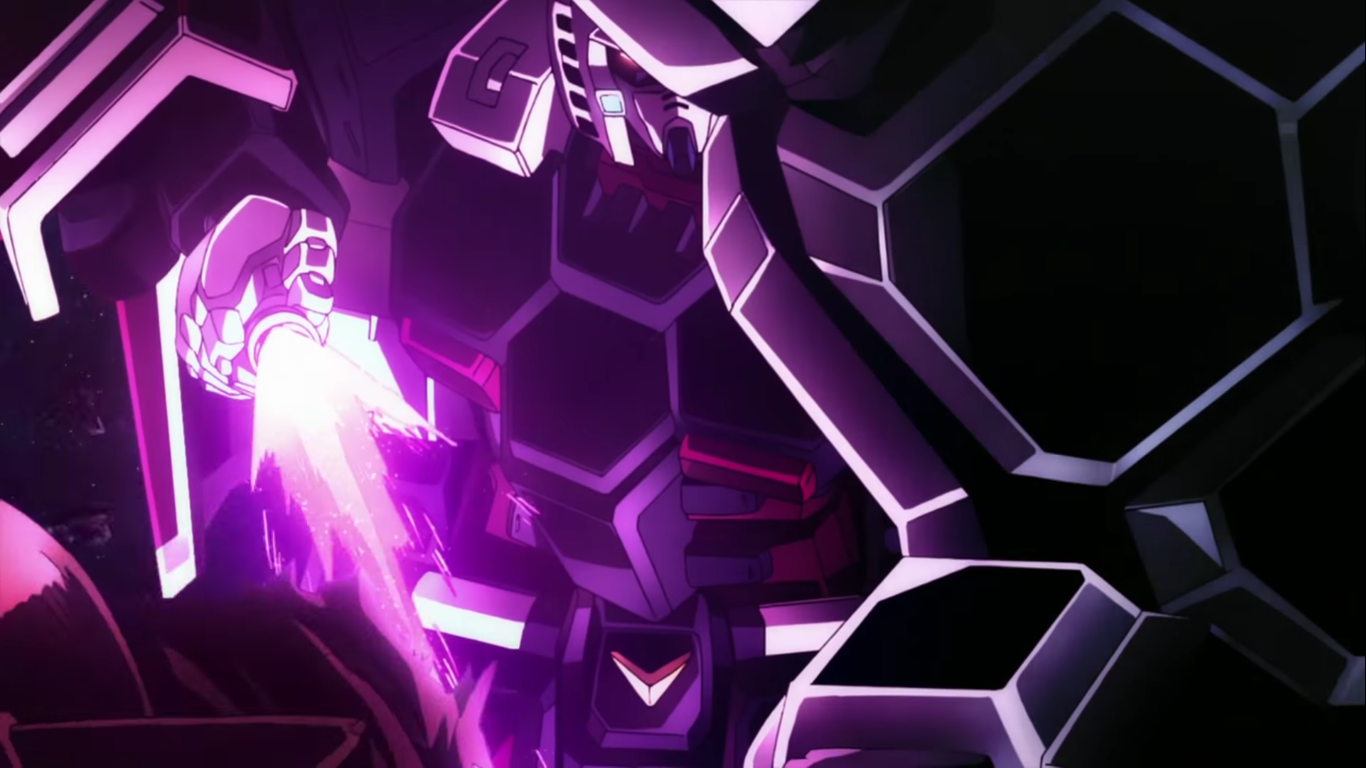
“Even though we may curse this war, we become more and more obsessed with it.”
Notice: The following contains spoilers and rambling thoughts about the movie Mobile Suit Gundam Thunderbolt December Sky, English Dub.
If you want focused writing, read The Atlantic.
Gundam is one of the premier anime franchises to come out of Japan. Since 1979, it has spawned numerous movies, alternate timelines, spin-offs, and of course, collectibles. For all these reasons, Gundam is eminently recognizable even to people who have never seen the series, or any anime whatsoever. Audiences a little familiar with the motifs underlying the franchise, though, will know that Gundam carries a severe anti-war message, one well conveyed in Mobile Suit Gundam Thunderbolt December Sky.
December Sky is a season of the show Mobile Suit Gundam Thunderbolt edited and compressed into a movie by writer/director Kō Matsuo. As a result, it lacks nuance in characterization and setting – the movie gives sparse exposition and worldbuilding, relying on the video description synopsis to provide background. While I would recommend this synopsis to anyone unfamiliar with Thunderbolt, the movie does lack some coherence and should not rely on sources outside of the film itself to convey the story – particularly since it’s so short, at under seventy minutes. It would have been simple to explain more about the setting by expanding the film just slightly to feature-length.
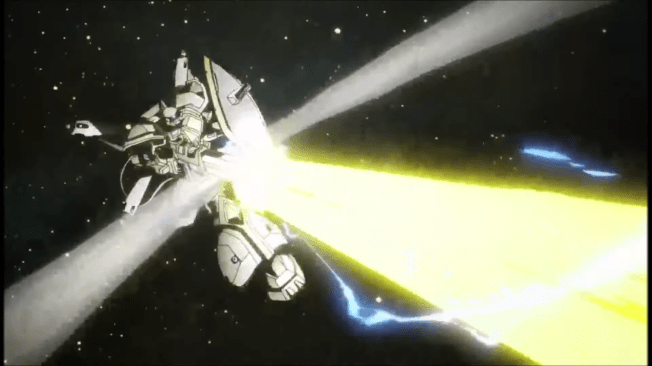
Essentially, the premise is that there are two warring factions, the Zeon and the Federation. The Zeon have destroyed a Federation colony, and the Federation are trying to retake their ruined land. The Zeon pilot bulbous green-and-purple Zaku mechs, while the Federation pilot angular white-and-navy RGM mechs. December Sky does a good job of explaining the small scale – the audience knows that there are snipers, and that the white mobile suits are meant to seek and destroy them. The film immediately signals the scale of the mobile suits by showing a destroyed car next to one, as well as depicting the carnage that has taken place in this area. Significantly, the whole Thunderbolt sector was previously the Federation colony of Side 4, although we do not see its destruction and only understand that one side sees it as their loss.
As far as larger stakes, the film neglects to explain Thunderbolt’s importance, particularly considering that the sector consists only of rubble. As a war movie, December Sky does a poor job in conveying the strategic stakes of the fight or the political background. Matsuo hurriedly sets up the conflict almost at the very beginning, before the two sides are established beyond two different-looking mobile suits being shown. It is fitting that one of the first things Federation protagonist Io Fleming does is cut off his friend Cornelius suggesting a scientific explanation for the sound quality of his pirate recording; The movie is not interested in the bigger picture, only the immediate moment and its thesis. Many characters are unnamed or not given surnames, the plot consists of the two sides attacking and counterattacking, and any strategy is presented in throwaway lines. Fleming is the ace pilot in charge of finding Zeon snipers, and his counterpart is among them. Daryl Lorenz is a Zeon ace sniper, and the movie’s other protagonist.
The first time we see people preparing for the attack on the snipers, the tone is fast-paced and light. Mobile suit crews float quickly along corridors to jazz, talking and smoking together. However, December Sky quickly establishes a grim tone by killing off these pilots in mobile suits one by one, not lingering but moving quickly from one death to the next. Usually a war movie loses some of its sting by having a protagonist who is at least less likely to die, but in the first attack sequence this movie avoids the comfort of having a perspective character. Matsuo mainly portrays war as horror when the basic models of suits are involved.
December Sky presents the Federation-Zeon conflict through the lense of dueling protagonists. The brash Fleming makes the war aggressively personal when he first meets Lorenz by taunting his taste in music and calling the double-amputee “peg legs.” This immediately sparks the rivalry between the two. His words could be understandable – the snipers have killed a number of his comrades – but since Fleming does not seem particularly close to anyone outside his Captain, Claudia, and engineer Cornelius, it is unlikely he spoke for anyone but himself. The movie depicts him as bloodthirsty – a thrillseeker using the war as an outlet. Cornelius claims that Io “doesn’t actually enjoy war,” but time and time again that is proven to be wishful thinking. He callously leads children into battle, calling them “expendables.” Max Mittelman portrays him in a cocky, aggressive tone perfect for the character. Fleming does not really have an arc – he begins the movie self-absorbed and remains so, cutting off Cornelius as he suits up, interrupting his friend to describe his fantasy in-depth.
Daryl Lorenz has more depth. Zeon has created the “Living Dead” division, composed of amputee soldiers repurposed for combat, and Lorenz uses his prosthetics to pilot a Zaku. The Chief Petty Officer often has flashbacks, either to how he lost his legs or to the time before the war. He claims a noble intention for wanting to fight – protecting his fleetmates – , and initially acts quiet and humble, but he has the same competitive streak as Fleming, trading barbs when they meet and later losing a hand when they duel for the first time. Johnny Yong Bosch has more of a challenge depicting the quiet anger mixed with hope inside Daryl, but does so deftly.
The protagonists are flanked in both cases by supporting characters. On the Federation side, Cornelius is a crewman and Fleming’s underappreciated best friend. He serves as a foil to the aggressive Fleming and the unstable Claudia, but does not have any development of his own. Claudia, the ranking officer in the Thunderbolt, has assumed command after her superiors died. Her characterization is rote, almost exaggerated – war has driven her to drugs, a version of morphine or heroin. Further, the film treats her arc in a hamfisted manner. Her XO gossips that “someone has reached her breaking point” immediately before she shoots up. She loves Fleming, which makes her suicidal as she has to order him and all her pilots into battle. Even when commanding her division on the bridge, she seems depressed. Like most other characterization in this movie, Matsuo conveys this through monologues, and so December Sky tells the audience rather than showing them. Cherami Leigh overacts the part, but Matsuo’s material does not help her whatsoever, as she has to deliver lines like, “Good luck my innocent children” to child soldiers – overemphasizing the point, as though using children in warfare was not inherently tragic enough.
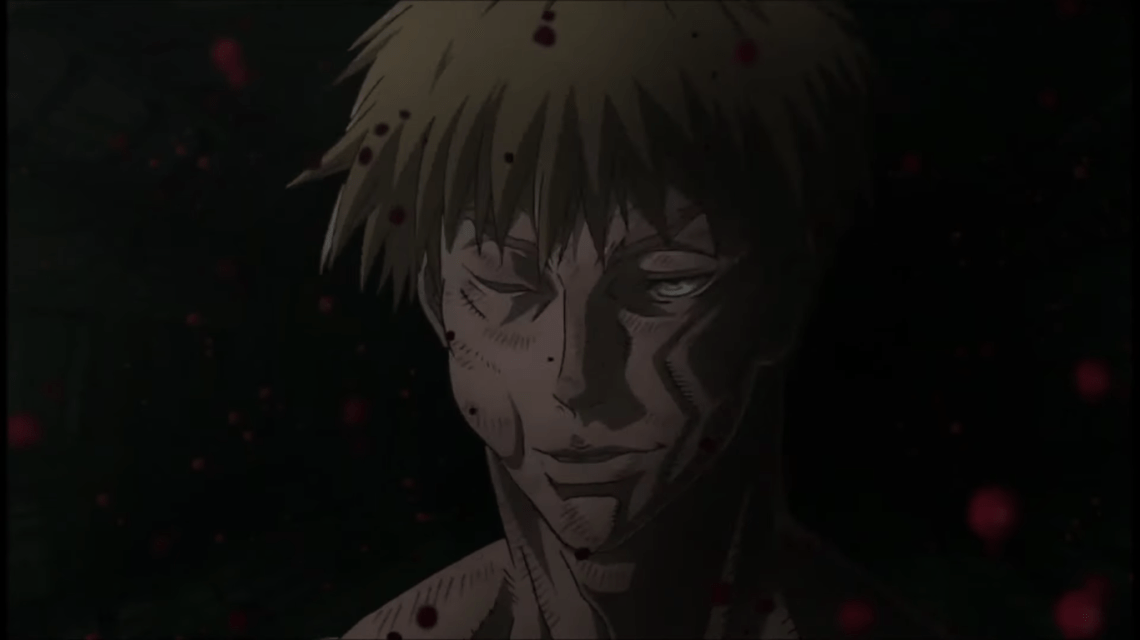
Fleming also has mildly inconsistent characterization. Before deploying for the first time in the movie, he calls the battlefield a “prison,” which contradicts his attitude of unabashed excitement while fighting. It isn’t performative, as he doesn’t say it with anyone else around, and apart from saying that flying the Gundam makes him feel free, it isn’t brought up again.
The Principality of Zeon also has its supporting characters. While Daryl’s copilots largely go unnamed, the scientists who build his equipment are given screen time. Dr. Sexton, the chief medical officer, is cartoonishly evil and selfish, at one point kicking a wounded soldier away from an escape pod to steal it. He exists to reinforce the harsh nature of war and make suggestions to worsen the lives of the main characters.
Dr. Karla, his subordinate, has much more contact with Lorenz. She explains her backstory, and unlike any other character, the movie provides her an answer to the question, “Why did you even enlist in the first place?” Her father was an anti-war activist whose life is threatened by the government to coerce her service. Her storyline could be the most dramatic in the film, and her actor, Tara Sands, emotes convincingly enough to draw the audience in, but unfortunately this potential is sabotaged by poor character development.
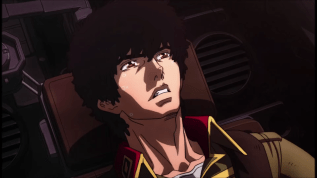
Through the course of the movie, Karla and Daryl bond, eventually kissing and promising each other to attempt to survive the war together. Karla then immediately demands to stay on a stricken ship, gets a gunner killed by firing on the Gundam, and then makes a suicide bomb. The doctor’s actions during the climax constitute a complete 180-degree reversal, and probably the worst side-effect of compressing the season into such a short span of time; There are definitely ways to transition a character from saying “I don’t want anything to do with this war” and having renewed hope to rigging explosives and agreeing with sentiments like “Let’s take them all with us,” but Matsuo does not elect to use any of them.
As a whole, December Sky relies on shorthand, and conveys entire character motivations in single lines. In one example, Claudia sums up her position with “I have to stop loving you – then I’ll be able to order you to your death.” The film is an odd mixture of never trusting the audience to understand the characters’ states and also never educating them on the larger backdrop. In fact, the film resembles Apocalypse Now in how separate the Thunderbolt sector seems to be from the respective chains of command. Morale is at rock bottom, and openly treasonous talk abounds on Claudia’s bridge between her second-in-command Graham and her officers. These unnamed characters mention class warfare, but this is so underdeveloped it barely counts as a subplot since it explains why Graham kills Claudia during the climax.
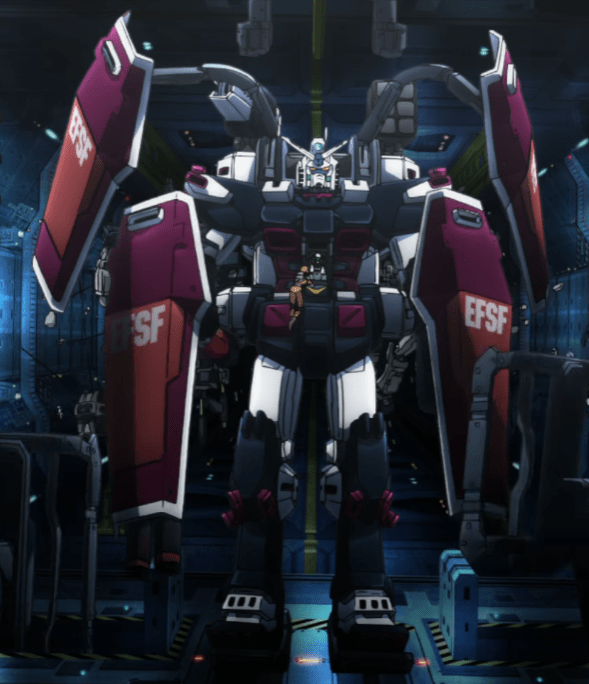
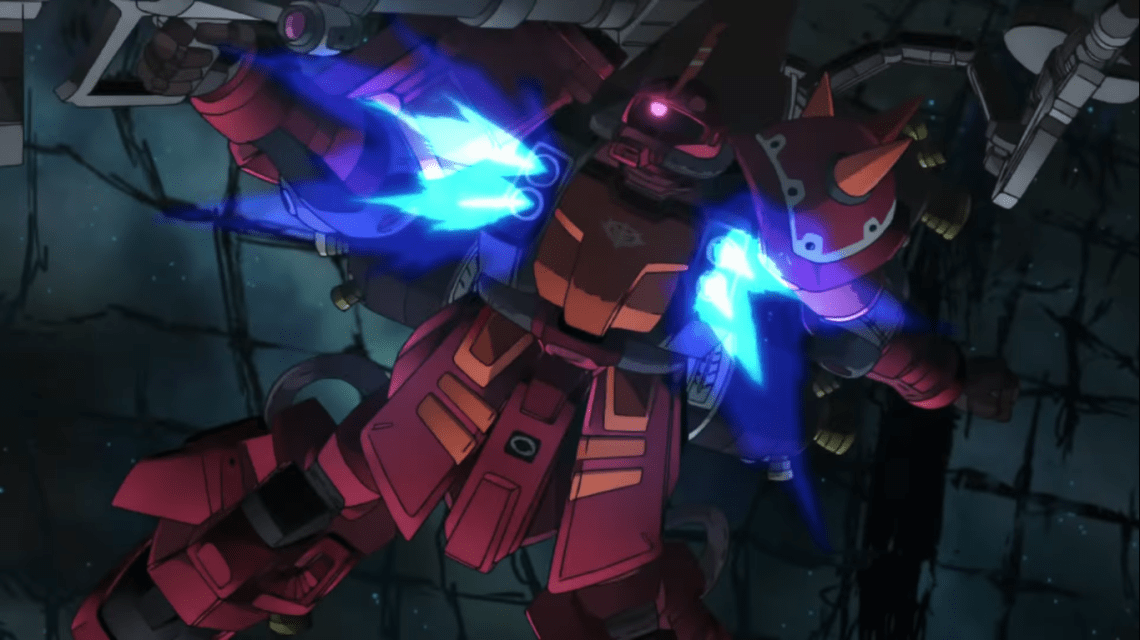
Eventually, both protagonists receive specialized mobile suits to enhance their abilities. Fleming receives the Full Armor Gundam to finish off the enemy, while Zeon creates the Psycho Zaku as a desperation tactic. However, their new mobile suit requires that the pilot’s nerves be uploaded directly to the controls, and so his captain orders Lorenz to have his fourth limb amputated. Karla performs the procedure in the most disturbing scene of the film, removing a perfectly healthy limb, and Lorenz wakes to see wires coming out of his stump and her crying in the corner.
Understandably, given his condition, Daryl often fantasizes about the past and being able to move freely – his prosthetics are portrayed as clumsy and unreliable. Piloting the Zaku is the only time he feels whole, and he has to sacrifice more and more to regain what he has lost. At one point, Lorenz misses a tossed drink, emphasizing in his mundane awkwardness the magnitude of what was lost. Tellingly, Daryl’s fantasy of mobility does not begin with himself in flesh and blood, but with a mobile suit running through the forest and disturbing the wildlife.
This daydream mirrors Fleming’s. Folk plays over scenes of battle, and Zeon and Federation forces kill each other over the colony, but since no named characters are involved in the fighting and the audience is only vaguely familiar with what happened there beforehand, there is no tension. Most likely this is a flashback of Io Fleming seeing his father’s suicide during the colony’s destruction, but since the colony seems to be ruined even before the battle, the sequence is unclear.

Upon Io receiving the Gundam, the next sequence of the movie takes on an almost horror aspect. The ace pilot’s eyes go wide as he becomes enthralled with the suit’s power and begins talking to it. The audience sees POV shots of a Zeon sniper as Fleming toys with him – destroying his weapons, dismembering him, and finally vaporizing him. The normally quiet Lorenz seems dragged down to Fleming’s level when he pilots the Psycho Zaku; He has forfeited his arms as well as his legs, but seems ecstatic with the trade, yelling gleefully with perverse tears in his eyes, “I can move more freely than I could with my old arms and legs!” This act could actually make Lorenz the character with the most depth in the movie – his first words after losing Hoover, Karla’s original lover, are that he was “never a big fan” because Hoover was “too much of a playboy,” which hints at a darker side to Daryl that the film sadly never explores.
The film presents multiple parallels between protagonists, from their daydreams to their wild abandon in combat, and more. In two cases, the protagonists have the other dead to rights, but in each case deus ex machina from the sky saves the prey – falling rubble and a thunderbolt. They anticipate each other’s moves, and both of them encounter each other in vastly uneven circumstances; Lorenz has the upper hand when sniping initially, and then Io turns the tables with his Gundam versus an old Zaku, but in each battle, the underdog overcomes.
The animators and cinematographer Kentaro Waki deserve praise for their work, which is the most entertaining part of the movie. The visuals impress both in the fight scenes and in the more mundane scenes showcasing the ‘70s aesthetic with the hairstyles, smoking, and radios. Several frames are portrait-like – notably, a beautiful image of the damaged Gundam descending on the Psycho Zaku with sword in hand, like a headless avenging angel. The fights are exciting, as expected of the franchise, and in fact may be one of the greater counterpoints against the film’s anti-war motif, since they portray the action so kinetically. The team takes advantage of the flashback sequences to display their artistry, for instance having an explosion bursting to become the sun on the beach. The way small details are included, such as a net catching the mobile suits as they enter the hangar or that bottles need stoppers in zero gravity is also impressive. The animation is largely fluid, with choppy movements appearing only rarely.
Talented artists such as Sakamoto Yoshie and Yahaba Ayumu contribute to the music, which proves to be another highlight. The soundtrack’s mix of bright pop, mournful ’70s-style country, and of course, freeform jazz all either fit perfectly with moments or juxtapose them, whatever the scene calls for. Discordant jazz, for instance, perfectly sets the mood for the Gundam’s serial killer-esque debut. The atonal beeping as Claudia dies provides the sole exception; This choice is jarring, neither fitting with the tone of the scene nor contrasting it for emphasis.
Surprisingly, for a movie that started with a mechanized Charge of the Light Brigade, December Sky pulls its punches as far as major casualties, as most of the main cast ends up living. Claudia is the major named death; Her notwithstanding, dozens die, but they are almost always unnamed and never given more than a few seconds of screen time. This undermines the movie’s thesis somewhat, but a convincing argument could be made that the survivors only live to illustrate the psychological horrors of war. Karla, after all, seems to go insane in her last moments on-screen, screaming in the hands of an RGM.
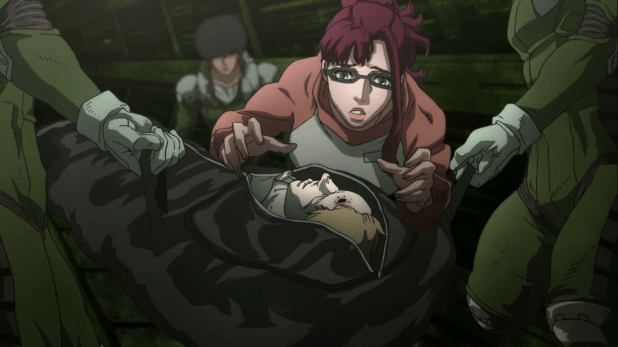
Fittingly for the first installment in a duology, the movie ends in a stalemate. Fleming and Lorenz duel to a standstill, and reinforcements arrive to each side in a show of deus ex machina. Cornelius convinces Karla that they should “figure out a way to survive this together” and disarm the bombs – reminding her of something she was told ten minutes ago. Though it seems to have kept its sensibilities and view of military from the ‘70s, and to have compressed its characterization and plot from the series, December Sky is an entertaining movie with good production values that argues its anti-war message solidly.
B-

 Disassembly